JLN Insights  ·  Blog

Ideas, experiences and voices from the Network

Here we feature what JLN partners, policy makers and practitioners are learning — from changing dynamic of health systems globally and in the country and translating knowledge to action.

Topics Covered
Health FinancingDomestic Resource MobilisationStrategic PurchasingContracting of Health ServicesPrimary HealthcareGovernance & AccountabilityClimate Health ResilienceDigital HealthHealth Emergency Preparedness

Every post advances a shared conversation

Latest from the BlogBlog
Blog, PHC

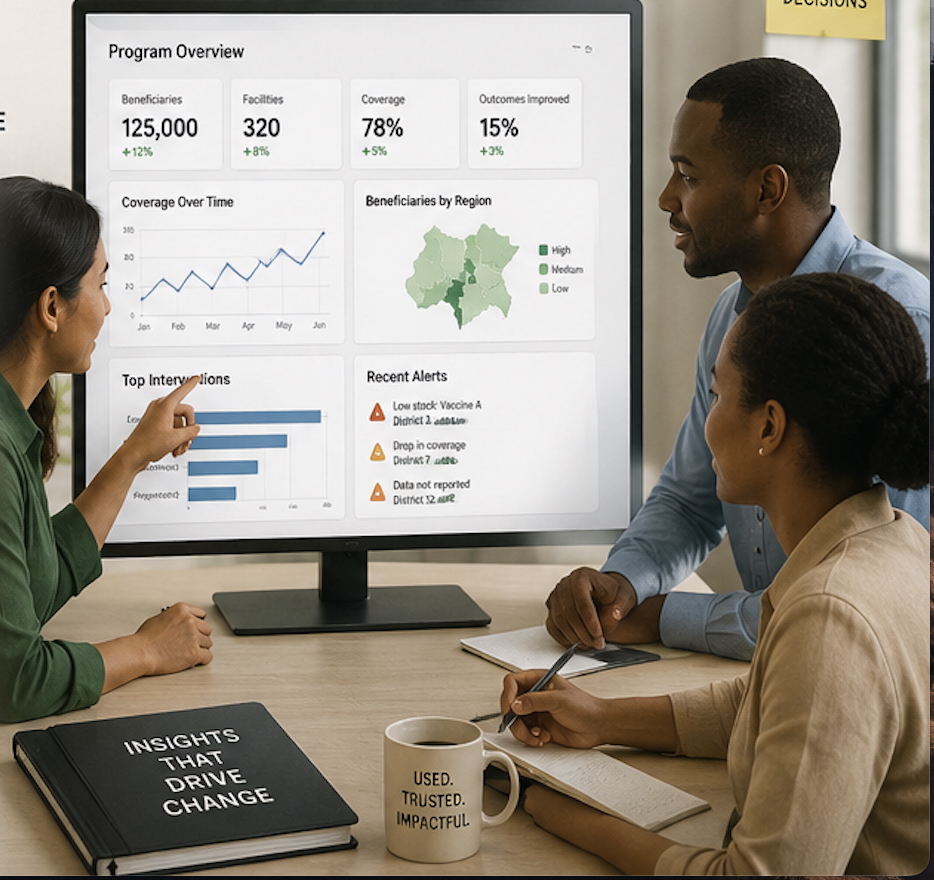
How to stop building dashboards nobody uses

Lurking on a server somewhere in your primary care system right now is a dashboard. It likely took months to build, contains data with the potential to improve essential healthcare nationwide, and – unless you’re in a minority – you either hate it, only use it when you have to, or don’t even know it exists.

Blog

More health for the money: Navigating the ins and outs of contracting of health services together

With the donor funding reductions and challenging economic times, many countries have found themselves in a challenging situation on what gets funded and how to finance their health system. Mobilizing additional domestic funding for health in Low- and Middle-Income Countries (LMICs) is challenged by highly informal economies, narrow tax bases, which constrains revenue collection, increasing debt, and limited fiscal space. Almost all LMICs are strategizing how to close funding gaps caused by reduced funding for health and how strategic purchasing approaches such as government-led contracting with the private sector can play an important role by offsetting challenges and augmenting both service delivery and financing in LMICs. Contracting has the potential to make the health system more efficient through delivering better value (higher quality care at lower or more efficient costs) achieving more health for the money.

Blog

How India and Egypt are building resilient pharmaceutical ecosystems

 Access to quality, affordable, and timely health products is fundamental to achieving Universal Health Coverage (UHC). Yet across many low- and middle-income countries (LMICs), pharmaceutical systems remain vulnerable to regulatory fragmentation, import dependency, supply chain disruptions and limited local manufacturing capacity - weaknesses that became even more visible during the COVID-19 pandemic and subsequent global supply disruption. 

Blog

Government Led-Contracting as a Critical Response to Changing Health Financing Landscape

The global health landscape is not merely shifting - it has fractured. The much anticipated “2026 Funding Cliff” has arrived, bringing with it a sharp retrenchment in development assistance for health. Between 2024 and 2025 alone, global aid flows declined by 21 percent, driven largely by a dramatic contraction in major bilateral financing. A recent analysis published in The Lancet Global Health warns that such abrupt reductions risk millions of preventable deaths by 2030, threatening to undo two decades of hard-won progress in controlling infectious diseases.

Blog, Global

Adapting to the Aid Transition: South–South  Collaboration and Catalytic Investment in a Fragmented World

As traditional development aid declines sharply—with cuts exceeding 70% from major donors between 2021 and 2025—African and Asian countries are navigating an unprecedented transition that demands new approaches to achieving universal health coverage. This article examines how South-South collaboration and catalytic investment mechanisms are emerging as critical strategies for sustaining health system progress in the post-aid era. Drawing on global experiences, including from the Joint Learning Network for Universal Health Coverage (JLN) and its Joint Learning Fund (JLF), we share how countries are leveraging peer-to-peer learning to mobilize domestic resources, and innovative financing to build resilient, country-owned health systems that limit the dependence on unpredictable flows of external assistance.

Blog, Global

Igniting Collective Power: Launching the CCG Community of Practice for Universal Health Coverage

The journey toward Universal Health Coverage (UHC) is rarely linear—it’s a shared path shaped by collaboration, resilience, and mutual learning. With the virtual launch of the Country Core Group (CCG) Community of Practice (CoP), the Joint Learning Network for Universal Health Coverage (JLN) introduced a dynamic new platform to unite countries in their collective pursuit of health for all.Global health leaders from across the JLN came together for the launch, driven by a common goal: to transform shared learning into stronger, more equitable health systems. The CCG CoP is not just a new initiative but the beginning of a vibrant movement, where we are attempting to redefine how we learn, collaborate, and take action for universal health coverage.”

More from the BlogAll posts

Understanding priority setting, resource allocation and financing trends for health: JLN Knowledge Product Showcase Series 

The JLN Knowledge Product Showcase Series (JLN- KPSS) was launched to provide the JLN community with greater exposure to JLN’s recently concluded and ongoing work. This seminar series enables key decision-makers and policymakers to become better acquainted with available JLN products and approaches for development. It also demonstrates products that can be scaled in their respective countries as sustainable innovations to attain their UHC priorities. During a recent session of the JLN KPSS, members addressed the critical global challenge of strengthening health financing systems and improving health system resilience amidst evolving health priorities. The relevance of these JLN resources is underscored in the context of the global decline in public health spending post-COVID-19, and the persistence of catastrophic out of pocket health spending which poses a significant barrier to UHC thereby emphasizing the need to prioritize public financing and improve budget execution. The session spotlighted two popular JLN resources produced under the World Bank led Health Financing Technical Initiative; the Health Priority Setting and Resource Allocation (HEPRA) toolkit (produced under the Efficiency Collaborative) and the Narrative Summaries on Public Expenditures for Health (produced under the Domestic Resource Mobilization Collaborative). These tools, developed collaboratively with inputs from several JLN member countries including Bangladesh, Kenya, Indonesia, and Ghana, aim to enhance evidence-based decision-making and policy dialogue.